
Outdoor Activity Ideas in Texas That’ll Surprise You
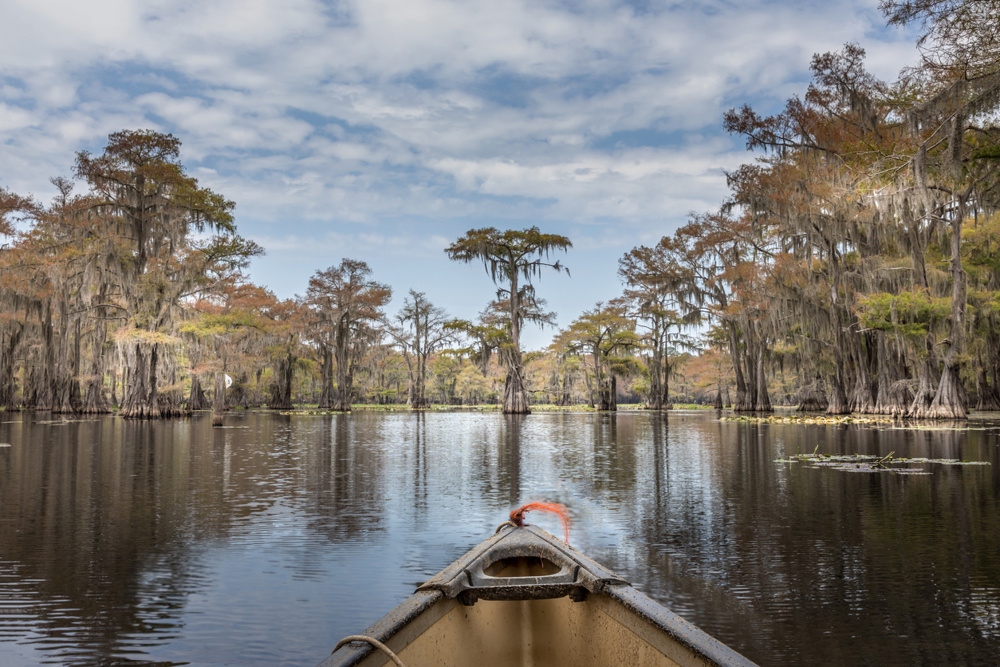
Texas offers far more than ranchlands and highways. You can paddle through Caddo Lake’s cypress forests, explore sections of the Trinity River Water Trail, swim in spring-fed pools that stay near 68–72 degrees year-round, climb internationally recognized bouldering routes at Hueco Tanks, or wade beside real dinosaur tracks at Dinosaur Valley State Park. These experiences reveal a side of Texas that feels unexpectedly wild, scenic, and diverse.
Texas Landscapes That Feel Like Different States
One reason Texas outdoor adventures surprise visitors is the dramatic shift in landscape from region to region.
East Texas Swamps:
In places like Caddo Lake and the Big Thicket region, bald cypress trees rise from dark water, Spanish moss drapes overhead, and alligators glide quietly through backwaters. The terrain is humid, green, and swampy—more reminiscent of Louisiana than the classic Texas stereotype.
Hill Country Limestone:
Central Texas features rolling hills, exposed limestone cliffs, and spring-fed rivers. Destinations such as Barton Springs, Pedernales Falls, and Enchanted Rock showcase rocky terrain carved by water over millions of years.
West Texas Desert:
Far West Texas, including Hueco Tanks and areas near Big Bend, reveals volcanic rock formations, desert flora, and wide-open skies. The terrain is dry and dramatic, with vast horizons and rugged mountain silhouettes.
Understanding these regional differences helps explain why Texas can feel like multiple states in one road trip.
Paddle Texas’s Cypress Forests at Caddo Lake
Gliding through the maze of bayous at Caddo Lake State Park feels like entering another era. The lake spans roughly 25,000 acres across the Texas-Louisiana border and is known for its bald cypress trees draped in Spanish moss.
American alligators inhabit the lake, particularly in quiet backwater sloughs, though sightings are not guaranteed. The ecosystem supports more than 200 species of birds, plus river otters, turtles, and abundant fish.
Canoe and kayak rentals are available at the state park and nearby outfitters. Paddlers should maintain a safe distance from wildlife and avoid approaching alligators, especially during warmer months when activity increases.
Explore the Trinity River Water Trail in North Texas
The Trinity River Water Trail stretches more than 130 miles through North Texas, connecting Fort Worth, Arlington, Dallas, and surrounding communities. It is designated as a National Water Trail by the National Park Service.
Not all sections flow through natural forested corridors; some segments pass through levee systems and urban landscapes. However, portions of the trail wind through the Great Trinity Forest in Dallas—one of the largest urban hardwood forests in the United States.
Multiple launch points make it possible to paddle shorter stretches rather than the entire corridor. Conditions vary by rainfall, so checking water levels before launching is essential.
Swim in Texas Hill Country’s Natural Pools
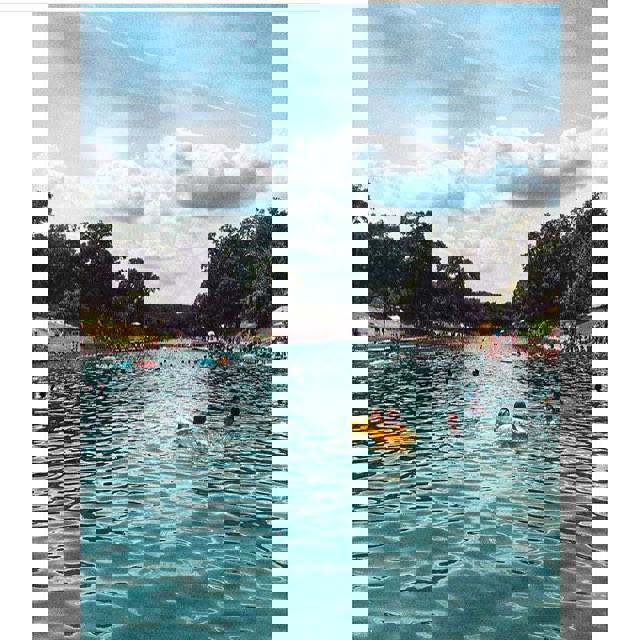
Texas Hill Country is known for its limestone geology and spring-fed swimming holes.
- Barton Springs Pool (Austin): A three-acre pool fed by the Edwards Aquifer, maintaining an average temperature near 68–70°F year-round.
- Hamilton Pool Preserve (Dripping Springs): A collapsed grotto with a seasonal waterfall; reservations are required.
- Jacob’s Well (Wimberley): A artesian spring with limited, reservation-only swimming during designated seasons.
- Krause Springs (Spicewood): A privately owned property with both natural and man-made pools.
Cliff jumping is not permitted at many state parks and preserves. Visitors should always confirm regulations and check current water conditions, especially after heavy rainfall when flash flooding is possible.
Climb at Hueco Tanks State Park & Historic Site
Near El Paso, Hueco Tanks State Park & Historic Site is internationally known for bouldering. The park’s volcanic rock formations contain natural pockets called “huecos,” which provide unique climbing features.
Hueco Tanks helped popularize the V grading system used worldwide for bouldering difficulty ratings. Climbers must check in at headquarters, and access to certain areas requires guided tours due to protected Native American rock art.
North Mountain is generally open for self-guided access after orientation. The park campground allows overnight stays with advance reservations.
Walk Beside Real Dinosaur Tracks
At Dinosaur Valley State Park near Glen Rose, visitors can see preserved dinosaur footprints in the Paluxy River bed. The tracks date back approximately 113 million years to the Early Cretaceous period.
When water levels are low, visitors can wade alongside visible trackways. Conditions change depending on rainfall, so sightings vary seasonally.
Additional fossil sites include the Heritage Museum of the Texas Hill Country near Canyon Lake, which preserves multiple trackways on private land.
Panhandle Wonder: Palo Duro Canyon
Often called the “Grand Canyon of Texas,” Palo Duro Canyon State Park in the Texas Panhandle is the second-largest canyon in the United States, stretching roughly 120 miles long and up to 20 miles wide.
Layered red rock formations, hoodoos, and steep escarpments create a landscape unlike anywhere else in Texas. Popular activities include hiking to the Lighthouse rock formation, mountain biking along canyon-floor trails, and camping beneath towering cliffs.
For travelers who assume Texas is flat, Palo Duro Canyon is one of the state’s most dramatic surprises.
Ride Technical Mountain Bike Trails in Hill Country
Texas Hill Country offers challenging terrain for mountain biking.
- Reveille Peak Ranch (Burnet): More than 60 miles of rocky trails across granite outcroppings.
- Spider Mountain (Burnet): Texas’s only lift-served bike park.
- Rocky Hill Ranch (Smithville): Flow trails, skills areas, and cross-country routes.
- Reimers Ranch Park (Travis County): Multi-use trails suitable for various skill levels.
Day passes and reservations may be required depending on the property. Always review trail maps and difficulty ratings before riding.
Sandboard at Monahans Sandhills State Park
In West Texas, Monahans Sandhills State Park features 3,840 acres of shifting dunes, some rising up to 70 feet. Located about 30 miles west of Odessa along Interstate 20, it is Texas’s primary sandboarding destination.
Visitors can rent sand discs at park headquarters. After rainfall, dunes are firmer and slide more easily. Fall and winter visits typically offer cooler temperatures and calmer winds.
Stay aware of heat conditions during summer months and carry adequate water.
Coastal Surprise: Padre Island’s Wild Dunes
For a Gulf Coast experience that feels unexpectedly remote, Padre Island National Seashore protects more than 70 miles of undeveloped coastline, making it the longest stretch of barrier island in the world.
Unlike resort-style beaches, this federally protected shoreline features windswept dunes, sea turtle nesting areas, and primitive camping zones. Visitors can drive sections of the beach with appropriate vehicles, fish directly from shore, or explore tidal flats teeming with birdlife.
The isolation and scale of the landscape surprise many first-time visitors who expect crowded boardwalks rather than protected wilderness.
Related posts