Fun Facts About San Antonio That Make It Worth Visiting
San Antonio blends Spanish colonial history, vibrant Mexican heritage, and modern skyline views in a way few U.S. cities can match. From centuries-old missions to lively markets and scenic riverfront pathways, the city offers both cultural depth and accessible attractions.
Many of its most famous sites—including the Alamo and portions of the River Walk—are free to visit. Add in a UNESCO World Heritage designation, historic irrigation systems that still function today, and panoramic views from a 750-foot tower, and it’s easy to see why San Antonio stands out as one of Texas’ most compelling destinations.
The Spanish Colonial Missions Form a UNESCO World Heritage Site
San Antonio is home to the San Antonio Missions National Historical Park, which preserves four 18th-century Spanish frontier missions: Mission Concepción, Mission San José, Mission San Juan, and Mission Espada. The fifth mission, The Alamo (Mission San Antonio de Valero), is managed separately but is part of the same UNESCO World Heritage Site designation.
In 2015, the San Antonio Missions became Texas’s first UNESCO World Heritage Site, recognizing them as the most complete collection of Spanish colonial missions in North America.
Visitors can explore original stone churches, living quarters, granaries, and defensive walls. The missions are connected by the Mission Reach Trail, an approximately 8-mile stretch of hike-and-bike paths along the San Antonio River.
One of the most remarkable features is the historic acequia irrigation system, portions of which still function today. These hand-dug canals once supported agricultural communities and remain a powerful example of early engineering in Texas.
The Alamo Offers Free Entry to One of Texas’ Most Famous Landmarks
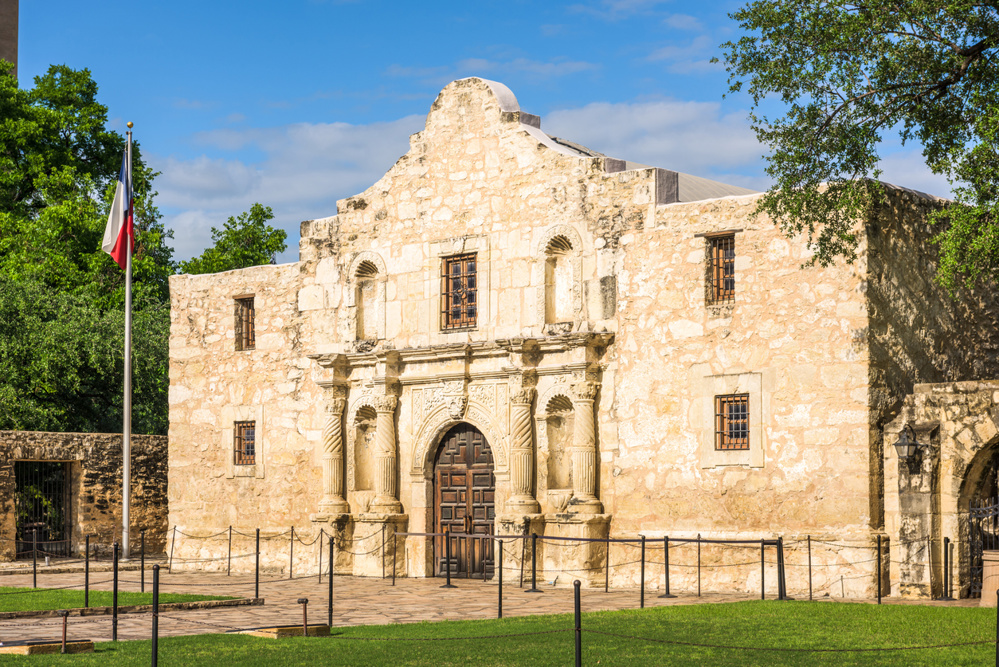
Located in the heart of downtown, The Alamo is one of the most visited historic sites in Texas. Admission to the church and historic grounds is free, though timed-entry reservations are now required for general admission to manage crowds.
The 1836 Battle of the Alamo lasted 13 days and became a defining moment in Texas history. Legendary figures including Davy Crockett, James Bowie, and William B. Travis were among the defenders.
The complex includes the iconic chapel and the Long Barrack (the oldest surviving structure on-site), where museum exhibits provide historical context. Guided tours and specialty exhibits are available for an additional fee.
The San Antonio River Walk Stretches for Miles Through the City
The San Antonio River Walk is one of the city’s most recognizable features. While the original downtown loop spans about 2.5 miles, the broader River Walk system extends roughly 15 miles, including the Mission Reach and Museum Reach sections.
Lined with restaurants, hotels, and cypress trees, the River Walk offers a scenic pedestrian experience below street level. South of downtown, the Mission Reach connects visitors to the four national park missions via paved trails ideal for biking and walking.
The River Walk originated as a flood control project following the devastating 1921 flood and has since evolved into a defining feature of the city’s identity.
Historic Market Square Is the Largest Mexican Market in the U.S.
Historic Market Square (El Mercado) spans three city blocks west of downtown and is widely recognized as the largest Mexican market in the United States.
Established in its current form in the late 1930s as part of a Works Progress Administration project, the market today includes more than 100 locally owned shops and stalls offering handcrafted goods, clothing, pottery, décor, and traditional foods.
Visitors can sample fresh aguas frescas, browse artisan crafts, and experience live music during festivals such as Cinco de Mayo and other cultural celebrations throughout the year.
San Antonio Is a UNESCO Creative City of Gastronomy
In 2017, San Antonio became a designated UNESCO Creative City of Gastronomy, the first city in Texas to receive the honor. This recognition celebrates the city’s deep culinary roots shaped by Indigenous, Spanish, Mexican, German, and frontier influences.
From authentic Tex-Mex and puffy tacos to contemporary farm-to-table restaurants, San Antonio’s food scene reflects more than 300 years of cultural exchange. Historic recipes coexist with innovative culinary concepts, and local chefs frequently highlight regional ingredients such as chiles, pecans, Gulf seafood, and mesquite.
This international designation places San Antonio among a select group of global cities recognized for preserving and promoting culinary heritage.
The King William District Showcases 19th-Century Elegance
Just south of downtown, the King William Historic District features beautifully preserved 19th-century mansions built by German merchants who prospered in the late 1800s. The neighborhood’s tree-lined streets and ornate homes reflect strong European architectural influences, making it one of Texas’ most distinctive residential districts.
Today, King William blends historic preservation with art galleries, cafés, and boutique inns, offering visitors a quieter cultural experience beyond the River Walk.
The Pearl Transformed from Brewery to Cultural Hub
Originally established in 1883 as the Pearl Brewery, this riverfront complex has been reimagined into one of San Antonio’s most vibrant gathering spaces. The Pearl now hosts a weekend farmers market, award-winning restaurants, boutique shops, and the Culinary Institute of America campus.
Its successful adaptive reuse highlights the city’s ability to blend historic industry with modern design and community life.
The Tower of the Americas Rises 750 Feet Above San Antonio
Built for the 1968 HemisFair, the Tower of the Americas stands 750 feet tall, making it one of the tallest observation towers in Texas.
The indoor observation deck sits at approximately 579 feet, offering 360-degree views of the city skyline and surrounding Hill Country. High-speed elevators transport visitors to the top in under a minute.
The tower also houses the Chart House Restaurant, a revolving dining venue that slowly rotates to provide panoramic views during your meal.
Thrill Rides and Marine Adventures Add Family Appeal
San Antonio also ranks as one of Texas’ top family destinations thanks to two major theme parks.
Six Flags Fiesta Texas, located in northwest San Antonio, features record-breaking roller coasters, seasonal festivals, and family-friendly rides set against a dramatic limestone quarry backdrop.
Nearby, SeaWorld San Antonio combines marine animal exhibits, live shows, water rides, and an adjoining Aquatica water park. The park emphasizes both entertainment and conservation education, making it popular with visiting families.
These attractions add a modern entertainment dimension to the city’s historic appeal.
San Fernando Cathedral Hosts “The Saga” Light Show
Located in Main Plaza, San Fernando Cathedral—one of the oldest cathedrals in the United States—serves as the backdrop for “The Saga,” a free outdoor light projection show.
Created by French artist Xavier de Richemont, the 24-minute visual experience projects images across the cathedral’s façade, telling the story of San Antonio’s history through animation and music.
Showtimes vary seasonally, and visitors are encouraged to check the city’s official schedule before attending.
Fiesta San Antonio Is a Citywide Celebration More Than 130 Years in the Making
One of San Antonio’s most famous traditions is Fiesta San Antonio, an annual 10-day festival held each April. What began in 1891 as a single parade honoring the heroes of the Alamo and the Battle of San Jacinto has grown into a citywide celebration featuring more than 100 events.
You’ll find colorful parades like the Battle of Flowers Parade—the only parade in the United States produced entirely by women volunteers—along with food festivals, live music, cultural showcases, and neighborhood celebrations. Fiesta attracts millions of attendees each year and highlights the city’s rich blend of Texan, Mexican, and multicultural heritage.
German Roots Still Shape the City’s Identity
While San Antonio is widely associated with Spanish and Mexican heritage, it also has strong German cultural roots. In the mid-1800s, German immigrants settled in the region, influencing architecture, education, and local business development.
Neighborhoods such as King William reflect this heritage, and German traditions remain visible in local festivals, breweries, and culinary influences throughout the Hill Country. This blend of cultures—Indigenous, Spanish, Mexican, German, and American—creates the uniquely layered identity that defines modern San Antonio.